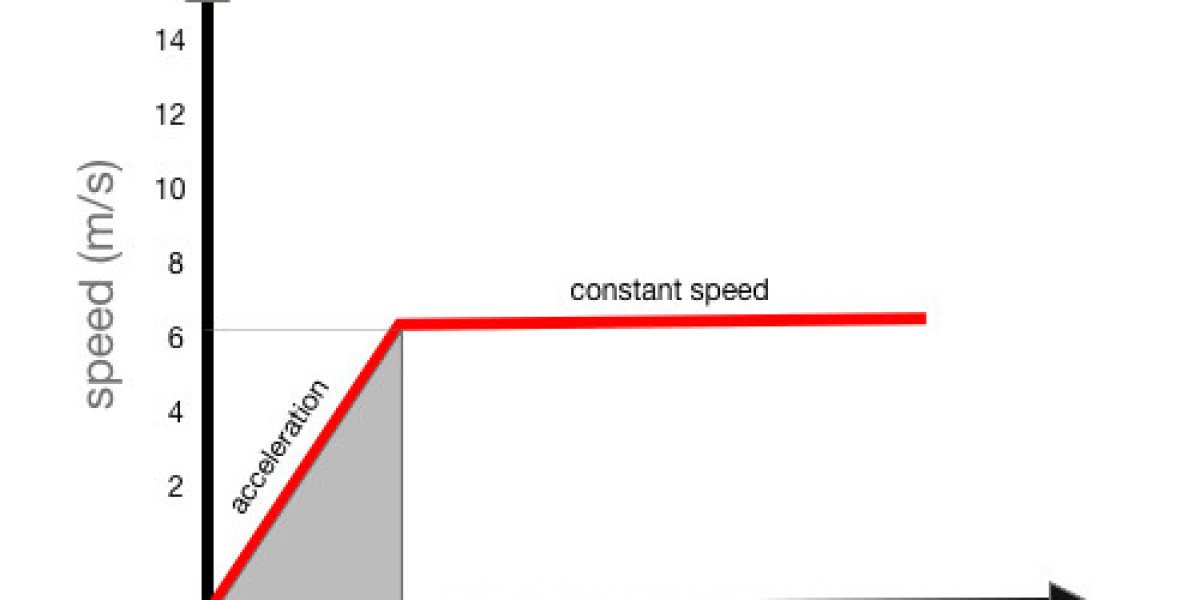

Understanding acceleration is one of the most crucial foundations in physics. Whether a student is studying basic mechanics or preparing for advanced examinations, the ability to calculate acceleration accurately forms the basis of solving motion-related problems. This is where a dependable magnitude of acceleration calculator becomes extremely helpful. With modern educational websites such as magnitude of acceleration calculator, learners can now compute acceleration quickly, reduce errors, and focus more on understanding the underlying physics concepts rather than getting stuck in manual calculations.
What Is the Magnitude of Acceleration?
Acceleration, in physics, refers to the rate of change of velocity of an object. When we talk about the magnitude of acceleration, we are referring strictly to the numerical value of acceleration without considering its direction. This is especially important when solving vector-based physics problems where only the absolute value of acceleration is required.
For example, if an object’s velocity changes from 10 m/s to 20 m/s in 5 seconds, the acceleration can be computed as:
a = (v₂ – v₁) / t = (20 – 10) / 5 = 2 m/s²
While this is a simple scenario, real-world problems often involve multiple velocity changes, different components, and vector magnitudes. This is why an efficient calculator can reduce the cognitive load on learners, allowing them to understand the physics rather than struggle with arithmetic.
Why Calculating Acceleration Can Be Challenging
Many learners struggle with acceleration because it is not always constant. Sometimes there are multiple directional components, such as in circular motion, projectile motion, or inclined-plane problems. In such cases, students need to compute acceleration using vector calculation methods such as:
a = √(ax² + ay² + az²) (for 2D or 3D motion)
a = v²/r (centripetal acceleration)
a = F/m (when force and mass are known)
Doing these calculations by hand repeatedly increases the chance of mistakes, especially under exam pressure. Therefore, an efficient acceleration calculator becomes a powerful study companion.
Features of an Efficient Magnitude of Acceleration Calculator
A well-designed acceleration calculator should offer more than just a simple formula solver. Students benefit most from calculators that include features such as:
1. Multiple Input Options
The calculator should allow input for any scenario including:
Initial and final velocity
Time taken
Velocity components in vector form
Applied force and mass
This flexibility helps students practice a variety of motion problems.
2. Step-by-Step Breakdown
Good calculators do not just give the answer— they show how the calculation is performed. This helps learners understand the physics instead of simply memorizing formulas.
3. Instant Unit Conversions
Physics problems may present different units, such as kilometers per hour instead of meters per second. Efficient calculators incorporate automatic unit conversions to avoid unnecessary calculation mistakes.
4. Clean and User-Friendly Interface
Students often use calculators on mobile devices. A clean interface helps them get answers quickly without distractions or confusion.
5. Accuracy Suitable for Academic Use
An ideal calculator must offer accuracy that meets the standards of middle school, high school, and IB-level physics.
How These Calculators Help Students Build Strong Concepts
Using a magnitude of acceleration calculator does not weaken a student’s mathematical skills. Instead, it strengthens their problem-solving abilities by:
Helping them verify their manual calculations
Building confidence through immediate feedback
Allowing them to focus on conceptual understanding
Reducing time spent on complicated vector math
Supporting revision and exam preparation
When learners are freed from repetitive arithmetic, they can analyze forces, directions, and motion more deeply— skills essential for higher-level physics.
Real-Life Scenarios Where Magnitude of Acceleration Matters
Understanding acceleration is not just for exams— it has real-world applications:
1. Vehicle Motion
Calculating how quickly a car speeds up or slows down involves acceleration.
2. Sports Performance
Athletes' performance analysis often uses acceleration measurements.
3. Engineering and Design
Design of vehicles, roller coasters, rockets, and aircraft all require precise acceleration calculations.
4. Astronomy and Space Science
Spacecraft motion and gravitational interactions depend heavily on acceleration vectors.
Recognizing these applications helps students appreciate why mastering acceleration is important.
Mid-Article Educational Resource for Practice
While calculators help with computation, learners also need past exam questions and structured practice material. This is where reliable educational resources prove valuable. For example, students preparing for international programs can benefit from platforms offering ib physics past papers to deepen their understanding through real exam-style problems.
The Role of Practice in Mastering Acceleration Calculations
Practice is a key factor in becoming proficient at acceleration-related questions. Students often face challenges such as:
Identifying which formula to use
Properly interpreting diagrams
Handling vector components
Understanding graphical representations of motion
When learners use calculators alongside past papers and guided practice, they develop a skillset that bridges conceptual and computational knowledge.
Using a Calculator vs. Manual Calculation: What’s Better?
A balanced approach is best. Here’s why:
Advantages of Using a Calculator
Saves time
Reduces arithmetic errors
Helps verify solutions immediately
Useful during revision and homework
Advantages of Manual Calculation
Strengthens fundamental understanding
Builds exam confidence
Enhances mathematical accuracy
Students preparing for competitive or international examinations should ideally practice both methods. Calculators help them learn efficiently, while manual practice ensures they are ready for test environments.
How Learners Can Integrate Calculators into Their Study Routine
To maximize learning, students can follow this strategy:
Read the problem carefully
Identify what values are given and what is being asked.Attempt the calculation manually
Apply the formula and work through each step.Use the acceleration calculator to verify
Check whether the manual answer matches the computed value.Analyze any differences
Identify where errors occurred, such as unit conversion or sign mistakes.Practice related problems
Move on to more challenging questions with vector or multi-step calculations.
By making calculators part of the practice workflow, students gradually reduce dependence while strengthening understanding.
How Teachers Can Use Acceleration Calculators in the Classroom
Teachers can make use of magnitude of acceleration calculators to:
Demonstrate concepts visually
Help students check their work
Provide instant feedback
Introduce real-world applications
Support differentiated learning for students at different levels
The tool becomes a teaching aid rather than just a computational utility.
Common Mistakes Students Make in Acceleration Problems
Even with calculators, students must avoid conceptual errors such as:
Confusing velocity with acceleration
Forgetting direction when dealing with vectors
Using the wrong time interval
Ignoring unit conversions
Incorrectly interpreting graphs (distance-time vs. velocity-time)
Recognizing these mistakes helps learners approach problems more carefully.
Why an Efficient Calculator Matters in Modern Learning
Modern education emphasizes smart learning, accuracy, and conceptual depth. An efficient magnitude of acceleration calculator supports all these goals by:
Making learning interactive
Reducing cognitive load
Encouraging independent practice
Helping students visualize results
Saving valuable time during revision
In a world where students balance multiple subjects and tight schedules, such tools enhance productivity and comprehension.
Conclusion
The journey of mastering acceleration is not just about plugging values into formulas— it is about understanding motion, forces, and vector relationships in physics. An efficient magnitude of acceleration calculator empowers learners by simplifying complex numerical tasks and allowing them to focus on core concepts. When combined with structured practice tools such as past papers, learners can significantly improve their problem-solving abilities and exam performance.