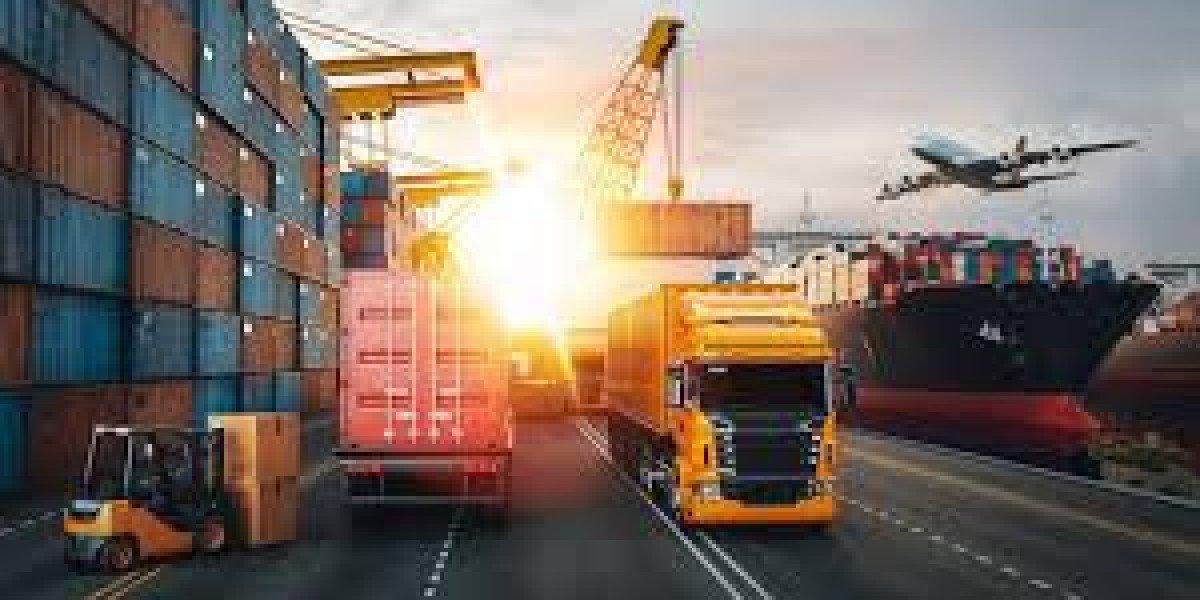

The logistics business is rapidly evolving. In the current dynamic economy, logistics play a crucial role in the transportation of raw materials, finished goods, and products in a business organization. Logistics is a significant part of the scenes, whether it is delivery in e-commerce, the supply chain of manufacturing, or interstate freight.
But many people still ask:
What are transportation, logistics, and supply chains? How does it work? And what are services? In this blog today we look at transportation, logistics, and supply chains and explain how their services are transforming in the year 2026.
What do we mean by the transportation, logistics, and supply chain?
Transportation moves it. Logistics tracks it. The supply chain controls the whole game—from the factory floor to your front door. By 2026, these three functions have become so intertwined that separating them is almost pointless."
Logistics:
Logistics refers to planning, transferring, stocking, and shipping goods to different locations in the most efficient, cost-effective, and dependable manner.
Logistics in terms of business is what makes sure that: In simple terms, logistics is the reason your order shows up Tuesday instead of whenever. It's the invisible system behind every delivery that actually goes right.
Logistics is an essential element of the supply chain, and it has a direct influence on the level of customer satisfaction and business profitability.
Transportation:
Like logistics, transportation is also a part of the supply chain. It includes moving goods, cargo, and parcels from one place to another place. If any business wants a type of delivery that includes real-time tracking and technical solutions services, then transportation is the best option.
Supply Chain:
I am explaining it last, but the supply chain is the main part of any logistics business. Transportation and logistics is the only part of it. Supply chain is an end-to-end process covering everything from raw material sourcing to final customer delivery. SCM is the overarching, strategic framework that coordinates all partners.
Understanding Transportation, Logistics, and Supply Chain Services
After knowing about what transportation, logistics, and supply chains are, let’s understand about their services.
Transportation Services
By 2026, the transport services have ceased to be a simple process of moving goods between point A and point B and are now advanced technologically. We witness the emergence of so-called green corridors and EV fleets becoming the order of the day.
It is no longer just about speed at all costs since the new focus has become on sustainable velocity, i.e., efficient movability of goods at a reduced carbon footprint.
Logistics Services
The internal mechanism is known as logistics, taking care of the storage and movement of goods. It is not just a warehouse owner making a modern logistics service provider company in 2026; they are data scientists.
They handle the complicated streams of information to make sure that the correct product is at the correct location at the appropriate time through the use of IoT sensors and automatic sorting machines.
Supply Chain Management Services
The whole ecosystem, i.e., the sourcing of raw materials to the doorsteps of the end customer, is the supply chain. Supply chains have moved past being linear toward circular, emphasizing recycling, reuse, and resilience to world crises in 2026.
Why You Need a Modern Transport Company in the Post-Digital Era
Days of using a local carrier with a clipboard have passed. A transport company nowadays
cannot but be a technology partner. In recent years, visibility measures reliability.
Companies require transparency of the whole process. The ability to monitor a package within a span of a few meters is the norm in the industry, whether it is a pharmaceutical delivery controlled by temperature or a high-value electronics delivery.
It is this accuracy that has seen businesses abandon the notion of fragmented vendors and shift over to powerhouses such as IGF Express.
The centralization of the transport process also leads to the minimization of very traditional hand-off errors that plagued the industry by the business.
3 Major Trends for Logistics Service Provider Companies in 2026
In past years, many changes have been made, and new technologies have come that change the trends and services of logistics businesses.
Predictive Analytics Using AI
AI is rapidly changing the whole industry, and logistics companies are no exception. With AI now a top logistics service provider, the company doesn’t delay the shipping anymore. And companies provide real-time tracking and solutions to their customers.
During the 2025 Diwali season, freight volumes in Western India spiked by over 300% in 72 hours. Companies using predictive AI rerouted shipments four days early. Everyone else was stuck apologizing to clients.
The "Amazon Effect" on B2B
The anticipation of next-day delivery has as well shifted to the B2B market. Manufacturers are now demanding raw materials that are as fast as a pair of sneakers and as trackable. This has compelled the transportation services to take up hyper-local hub models whereby the distance between the warehouse and end destination is minimized.
Sustainability and ESG Compliance
Let's be honest—'green logistics' was greenwashing for years. Most companies slapped a leaf on their website and called it a day. But with EU carbon compliance laws now carrying real financial penalties, the game has changed. You either clean up your supply chain or you pay for it.
Ecologically friendly warehousing with solar power, biodegradable wrappers, etc.: the effects of a supply chain on the environment have become important indices of corporate performance.
Conclusion
The businesses winning in 2026 aren't the ones with the biggest fleets. They're the ones who know where every pallet is at 2am—and can reroute it before sunrise.
That's not a distant vision. It's already happening. Companies like IGF Express Logistics are proving that speed, visibility, and sustainability aren't trade-offs—they're the new standard.
The question isn't whether logistics is changing. It's whether your business is ready for it."