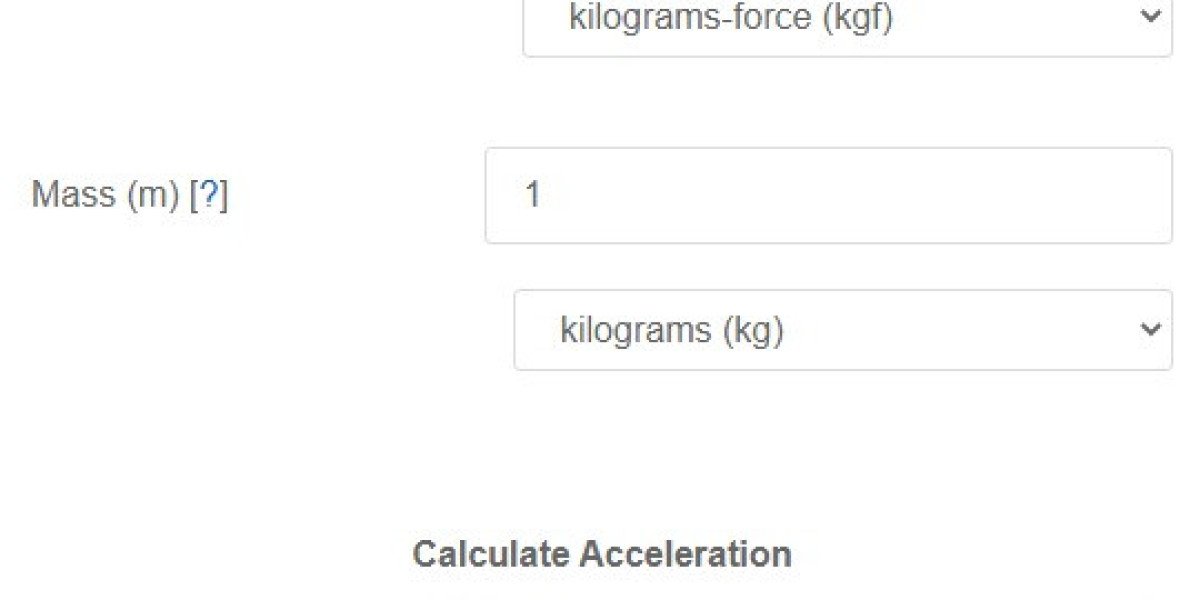

Physics has a reputation for being one of the most challenging subjects students encounter. From complex equations to abstract theories, it can feel intimidating at first glance. However, physics does not have to be overwhelming. With the right mindset, structured strategies, and practical tools like an acceleration calculator you can break down even the toughest topics into manageable steps. The key is not to study harder, but smarter.
In this article, we will explore practical, proven techniques that help you study physics effectively without stress or burnout. Whether you are preparing for school exams, competitive tests, or university-level courses, these strategies will make physics clearer, more engaging, and less intimidating.
Understand Physics as a Conceptual Subject
One of the biggest mistakes students make is treating physics like a subject that requires memorization. Physics is not about memorizing formulas; it is about understanding relationships.
For example, instead of memorizing Newton’s laws, try to understand how force, mass, and acceleration relate to real-world experiences. When you push a shopping cart, you are applying force. When the cart moves faster, that is acceleration. By connecting theory with daily life, you strengthen conceptual clarity.
Whenever you encounter a formula, ask yourself:
What does each variable represent?
How do these variables affect one another?
What real-world situation does this describe?
Understanding the “why” behind formulas reduces confusion and improves long-term retention.
Break Large Topics Into Smaller Sections
Physics can feel overwhelming because topics are interconnected. Mechanics connects to motion, motion connects to force, and force connects to energy. Trying to learn everything at once leads to frustration.
Instead, divide chapters into smaller segments:
Kinematics
Laws of motion
Work and energy
Momentum
Rotational motion
Study one concept at a time. Once you master it, move to the next. This method reduces cognitive overload and helps you build knowledge step by step.
Create a Realistic Study Plan
Consistency beats cramming. Rather than studying physics for six hours straight, schedule shorter, focused sessions.
A practical study routine might look like:
30–45 minutes reviewing theory
30 minutes solving numerical problems
15 minutes reviewing mistakes
Include short breaks between sessions. The brain absorbs information better when it has time to rest.
Set achievable daily goals. For example:
Understand projectile motion concepts
Solve 15 related practice questions
Review incorrect answers
Clear goals prevent anxiety and keep your progress measurable.
Practice Problem-Solving Daily
Physics is learned by doing, not reading.
Many students spend hours reading textbooks but avoid solving problems. This leads to false confidence. When exams approach, they panic because they have not practiced applying concepts.
After understanding a topic, immediately solve:
Basic conceptual questions
Standard numerical problems
Application-based problems
Start with easier questions to build confidence. Gradually increase the difficulty level.
When stuck, do not panic. Break the problem into parts:
What information is given?
What is being asked?
Which formula applies?
Are units consistent?
This structured approach prevents mental overload.
Focus on Units and Dimensions
Physics errors often come from ignoring units. Always write units alongside numbers.
For example:
Velocity in meters per second
Acceleration in meters per second squared
Force in newtons
Dimensional analysis can help verify whether your answer makes sense. If units do not match, revisit your calculation.
This simple habit reduces careless mistakes and builds confidence.
Use Visual Learning Techniques
Physics concepts are easier to understand when visualized.
Draw diagrams whenever possible:
Free-body diagrams
Motion graphs
Energy flow diagrams
Circuit diagrams
Even simple sketches improve understanding. If you are studying projectile motion, draw the path. If studying forces, draw arrows representing direction.
Visual learning reduces mental strain and simplifies complex ideas.
Strengthen Your Math Foundation
Many students feel overwhelmed by physics because they struggle with math.
Physics frequently uses:
Algebra
Trigonometry
Basic calculus
If math feels challenging, spend time reviewing foundational concepts. Practice rearranging equations. Work on solving simultaneous equations. Revise basic trigonometric identities.
When math becomes comfortable, physics automatically feels easier.
Review Mistakes Without Fear
Mistakes are not signs of failure. They are learning tools.
After solving practice questions:
Identify incorrect answers
Understand why they were wrong
Redo them without looking at the solution
Keep a “mistake notebook.” Write down common errors and review them weekly. This method prevents repetition of the same mistakes.
Use Tools Wisely
Technology can simplify learning if used responsibly.
Online simulations, explanatory videos, and calculators can reinforce understanding. For motion-related problems, an acceleration calculator physics can help verify calculations and ensure accuracy.
However, tools should support learning, not replace it. Always attempt to solve problems manually before checking answers.
Develop Conceptual Thinking Over Formula Memorization
Instead of memorizing formulas blindly, understand how they are derived.
For instance:
Acceleration equals change in velocity divided by time
Force equals mass multiplied by acceleration
If you understand the relationship behind these equations, you can derive them logically instead of trying to memorize them.
This reduces stress during exams because you rely on understanding rather than memory.
Practice Active Recall
Reading notes repeatedly is not effective.
Instead:
Close your book and try to explain the concept aloud.
Write formulas from memory.
Teach the topic to a friend or imaginary audience.
Active recall strengthens long-term memory and reduces exam anxiety.
Solve Past Papers
Past exam papers reveal:
Common question patterns
Important topics
Frequently tested concepts
Simulate exam conditions when solving them:
Set a timer
Avoid using notes
Check answers afterward
Regular practice builds confidence and eliminates surprises on exam day.
Study in a Distraction-Free Environment
Physics requires focus.
Turn off unnecessary notifications. Keep your study space organized. A clutter-free environment improves concentration and reduces mental fatigue.
If you prefer background noise, use instrumental music instead of songs with lyrics.
Manage Stress and Stay Balanced
Overwhelmed students often study for long hours without rest.
Remember:
Sleep improves memory consolidation.
Short breaks improve productivity.
Exercise enhances brain function.
A healthy body supports an effective mind.
When you feel frustrated, step away for a short walk. Returning with a refreshed mind often makes complex problems easier.
Ask Questions Without Hesitation
Do not let confusion accumulate.
If you do not understand a concept:
Ask your teacher.
Discuss with classmates.
Join study groups.
Use reliable educational resources.
Clarifying doubts early prevents bigger confusion later.
Build Confidence Gradually
Confidence in physics grows with practice and understanding.
Start with simpler problems. Celebrate small achievements. Each correct solution strengthens belief in your abilities.
Avoid comparing yourself to others. Focus on personal improvement.
Develop Long-Term Thinking
Physics is cumulative. Concepts build on one another.
If you struggle with advanced topics, revisit foundational chapters. Strong basics make advanced lessons manageable.
Review previous chapters regularly to maintain conceptual clarity.
Use Summary Sheets
Create concise summary notes for each chapter:
Key formulas
Important definitions
Common mistakes
Short concept explanations
Review these sheets weekly. They are especially helpful before exams.
Stay Curious
Physics describes how the universe works.
Instead of viewing it as a difficult subject, see it as a way to understand reality:
Why does the sky appear blue?
How do airplanes fly?
What keeps satellites in orbit?
Curiosity transforms stress into excitement.
Avoid Multitasking
Studying physics while checking social media reduces efficiency.
Focus on one topic at a time. Deep work produces better results than scattered effort.
Final Thoughts
With patience and persistence, physics becomes less intimidating and more rewarding. Remember, every complex equation represents a simple idea about how the world works. Master the idea, and the equation will follow.
By applying these strategies, you will not only improve your grades but also develop analytical thinking skills that benefit you far beyond the classroom. Physics is not about surviving exams; it is about learning to think logically, systematically, and confidently.