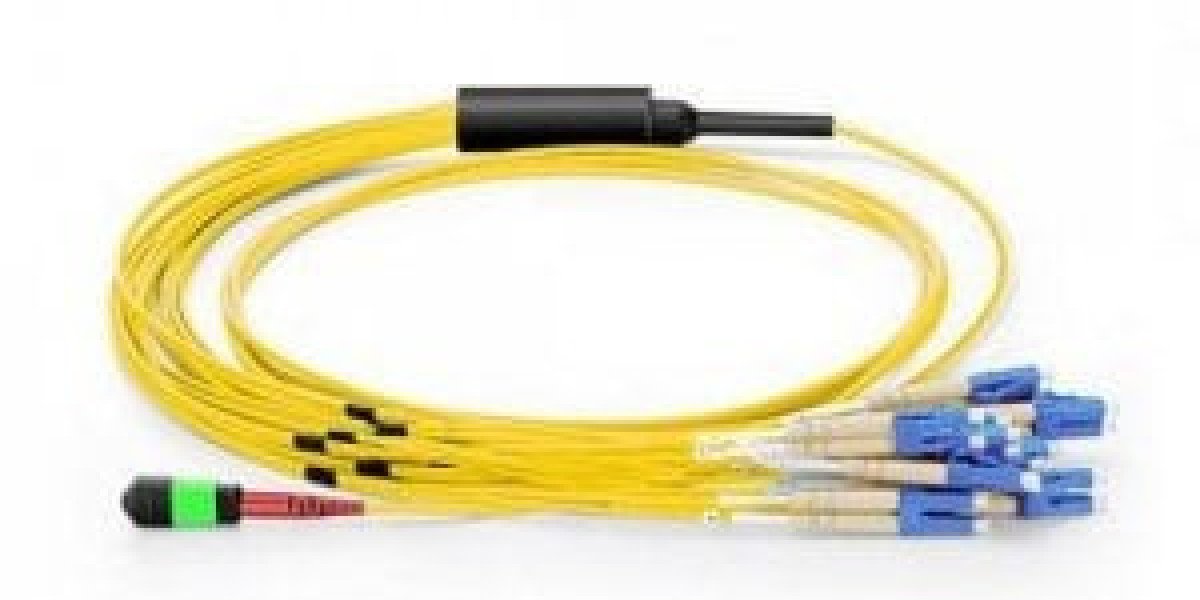

Modern enterprise-level companies depend on fast, stable, and secure data networks to operate daily business tasks. Fiber network architecture has become one of the most important parts of this goal, especially for organizations that deal with large amounts of data, cloud computing, and remote collaboration. At the start of many fiber network setups, the use of an mtp mpo fiber patch cable provides a high-density and efficient way to connect fiber links inside data centers, office buildings, and server environments. This gives companies the ability to manage growing data demands while keeping the network clean, organized, and easy to scale over time.
Fiber network architecture can be understood as the overall design that connects multiple devices, floors, offices, and systems together in one digital environment. This environment must support everything from internal emails to high-level data analytics and virtual infrastructure. When companies plan their fiber layout, they must think about the future, not just the present. As digital transformation accelerates, companies often require stronger infrastructure to support cloud migrations, data streaming, AI workloads, virtual desktops, and cybersecurity tools. A well-designed fiber network helps them avoid bottlenecks, signal loss, and system overloads.
One of the main benefits of fiber architecture is its speed and bandwidth capacity. Fiber cables use light to transmit information instead of electrical signals. This allows data to travel faster and with fewer errors. For enterprise networks, this means less downtime, fewer disruptions, and smoother user experiences. Large organizations also appreciate that fiber has longer distance capabilities than copper cables, making it ideal for linking different buildings, large campuses, warehouses, or remote hubs without losing signal strength.
Inside many modern enterprises, dense data centers play a major role in overall operations. These facilities operate thousands of connections that must be managed in a limited area. To handle this, system designers look for high-density fiber solutions that can pack more data paths into smaller spaces. Here, the use of an mtp fiber optic cable becomes an important option because it reduces cable bulk, improves airflow, and makes installation easier. Space-saving cable layouts also reduce future labor costs when upgrades or reconfigurations are required.
Another part of the fiber network architecture worth exploring is flexibility. Network demand does not stay the same over time, especially for companies experiencing growth or entering new markets. Fiber makes it possible to scale bandwidth quickly without rebuilding the entire system. In many cases, upgrades can be done by replacing modules, rearranging patch panels, or adding new connections. Fiber architectures support modular design, allowing companies to upgrade sections at a time instead of replacing everything at once.
Enterprise-level networks also require strong security. Fiber networks provide more protection against data leaks and signal tapping compared to copper. Because fiber uses light signals, it is difficult for outsiders to intercept data without being detected. This makes fiber architecture especially useful for industries that must follow strict data compliance rules, such as finance, medicine, defense, and research institutions.
As companies continue to move their workloads to cloud platforms, fiber networks also help reduce latency. Lower latency means faster response times and smoother experiences for virtual applications. Employee productivity improves when systems load quickly, and customers also benefit from faster digital services. Low-latency networks are also important for real-time analytics, automation systems, and artificial intelligence tools.
The final piece to examine is how fiber networks manage distribution. In enterprise systems, data does not travel in a straight line. It moves across switches, servers, routers, labs, endpoints, and cloud gateways. For this reason, distribution cables must support accurate routing and organization. A useful solution for this is the mtp breakout cable, which allows a single high-density cable to split into multiple separate connections. This helps spread bandwidth across multiple devices without adding cable clutter. Organized cable distribution makes troubleshooting easier, enhances airflow, and keeps network racks clean.
In conclusion, fiber network architecture has become a key part of enterprise-level digital strategy. It delivers speed, security, scalability, and long-term flexibility. With growing demand for cloud computing, remote work, automation, and real-time data processing, companies that invest in fiber networks are better prepared for the future. The combination of efficient design and high-density components helps organizations build stronger digital foundations that can grow with their business goals.